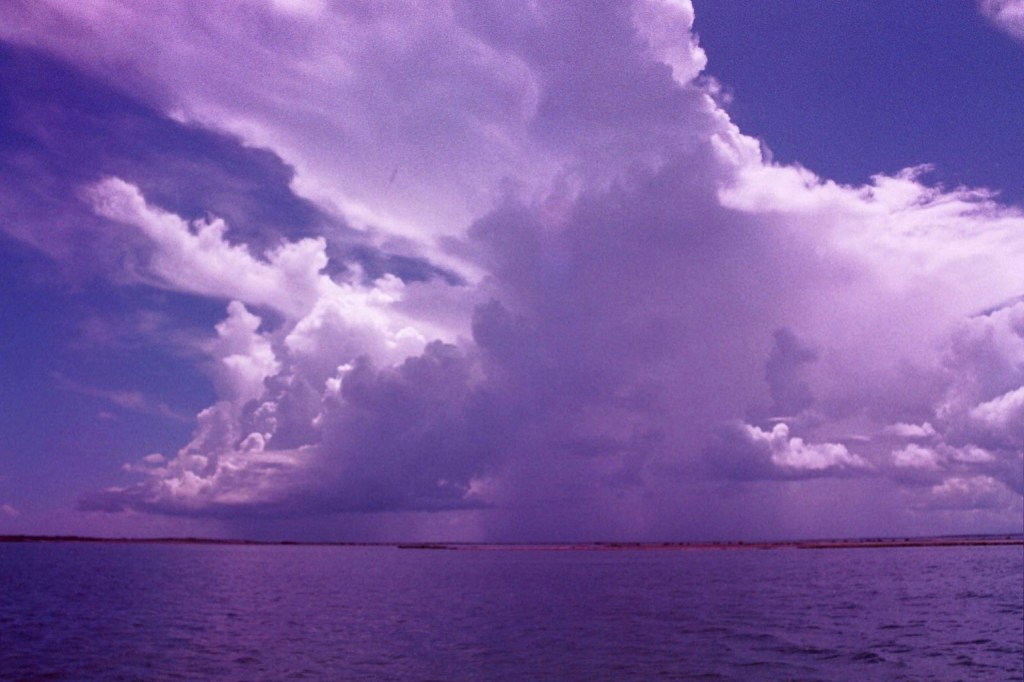
In the year 2009 the University of Texas Rio Grande Valley (then UTPA) obtained funding for a summer camp in marine ecology. High school students were selected from Dawson High School in Pearland, Texas and The International Baccalaureate Program at Lamar Academy from McAllen Independent School District. The five-day camp was held at The University of Texas Rio Grande Valley Coastal Studies Laboratory on South Padre Island, Texas. Students studied ecological aspects of the Laguna Madre. Topics of study focused on the influence of the Arroyo Colorado on the Laguna Madre. These included the impact of salinity on vertebrate and invertebrate biota. One of the posters is directly below. The camp utilized excursions aboard the R/V Katy, a 57-foot research vessel owned by the University of Texas at Austin Marine Science Institute (UTMSI) in Port Aransas, Texas.
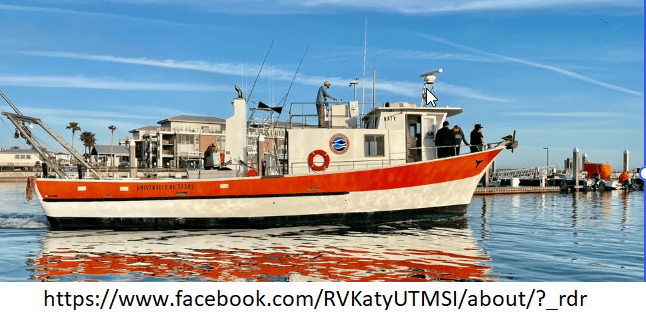
Other studies conducted by students on the RV Katy included the impact of salinity along varying points influenced by the Arroyo Colorado. In other years students measured photosynthesis and respiration with on-board incubations (see poster below).
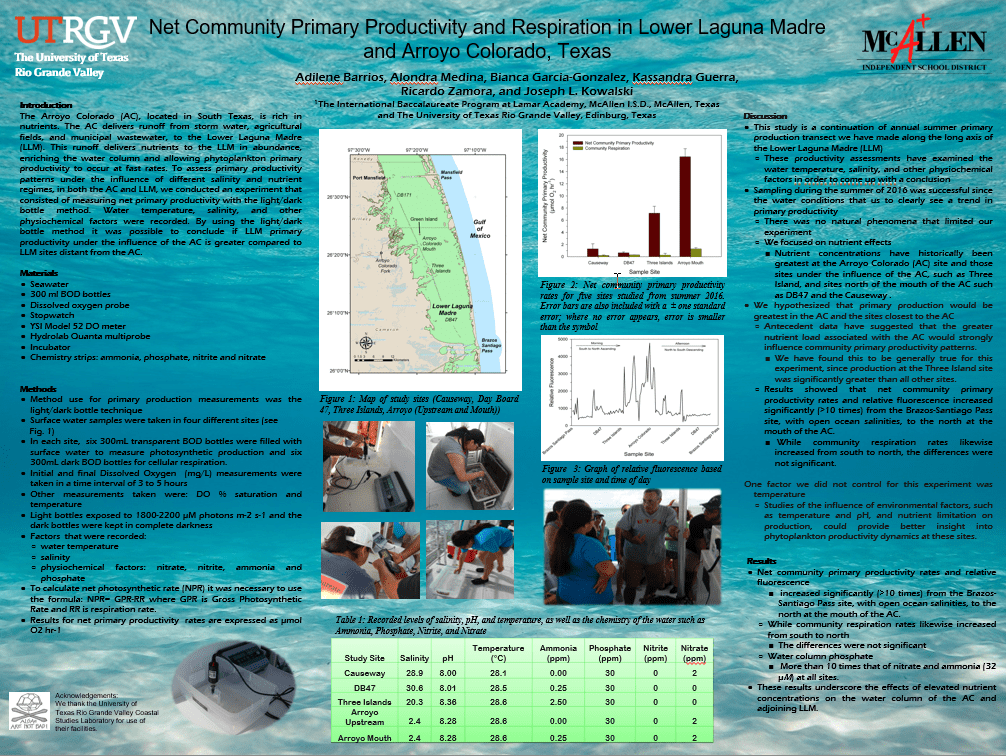
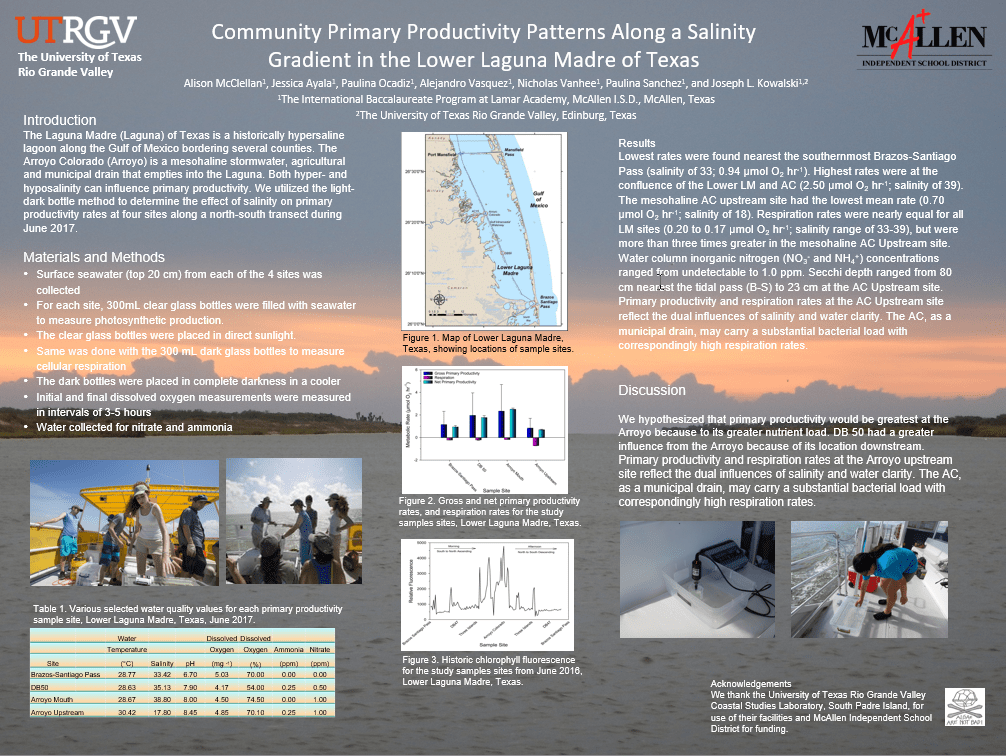
The following posters below are of primary productivity, but in different years.
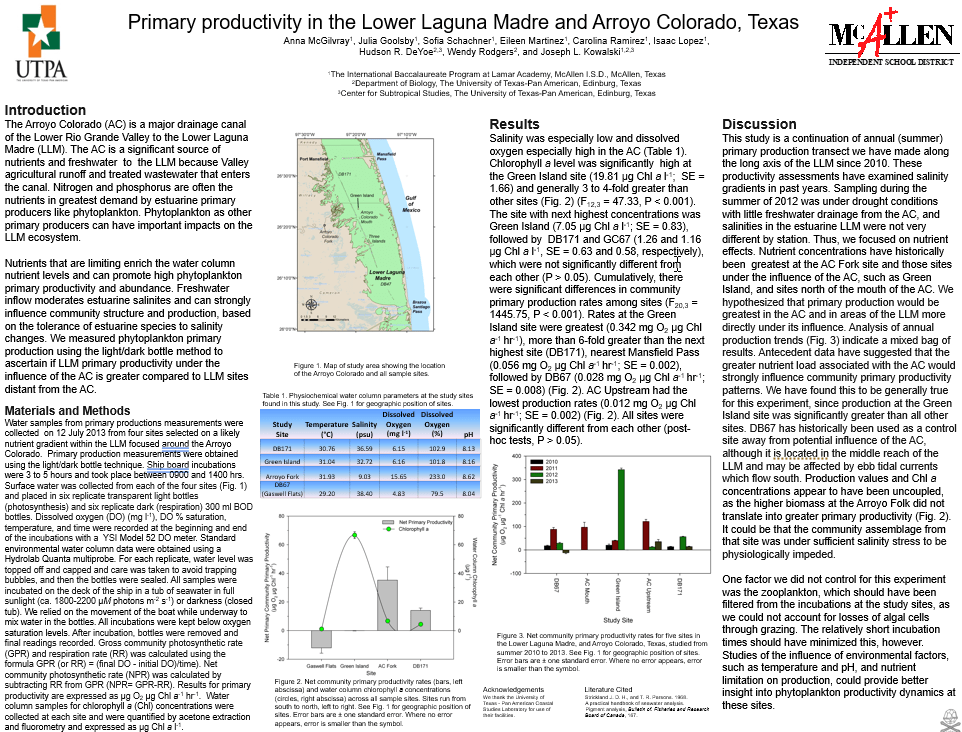
Other studies also deal with primary productivity but were studied in relation to how plants deal with the macronutrients, nitrogen and phosphorous. See the poster below.
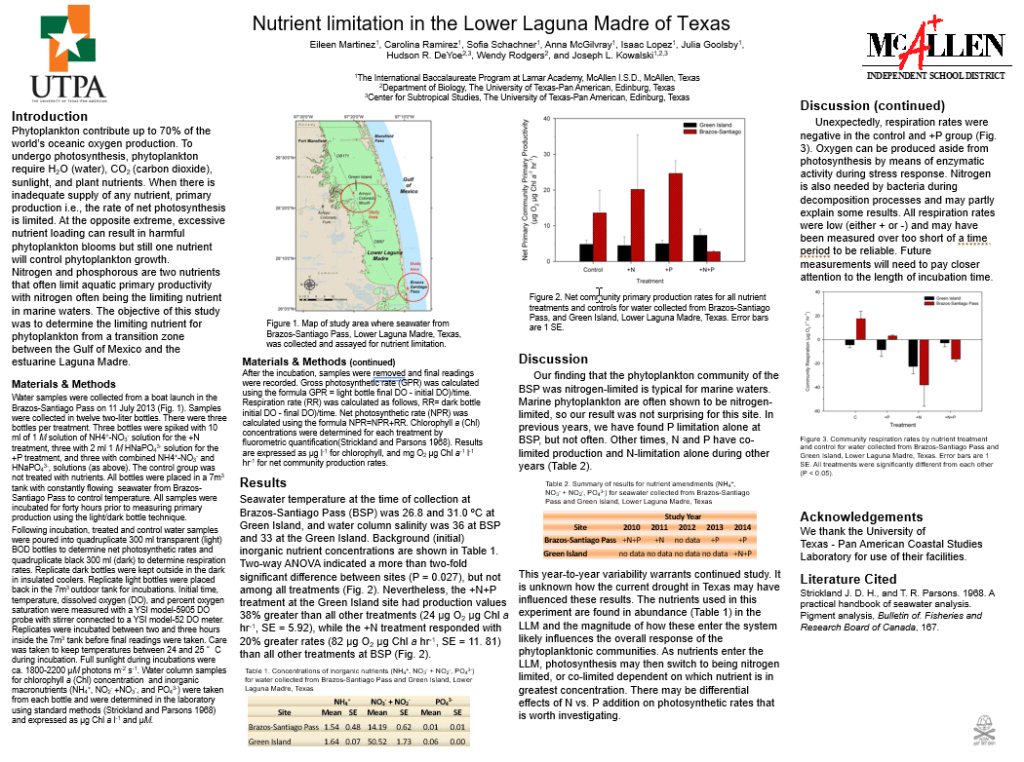
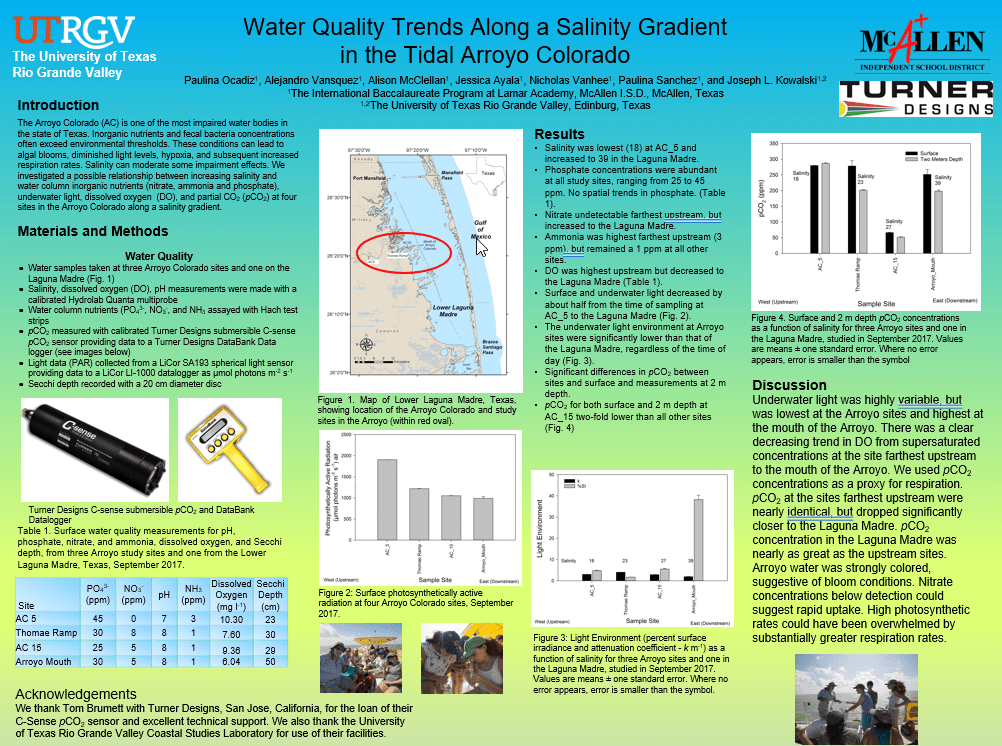
The nutrients, nitrogen and phosphorous, contribute to water quality, which can influence how much light and dissolved oxygen are available to the biota of an estuary. Some of our studies examined how the Arroyo Colorado, municipal and agricultural drains, influenced the health of the Laguna Madre. We are interested in the Arroyo Colorado because it carries dissolved nutrients and oxygen.
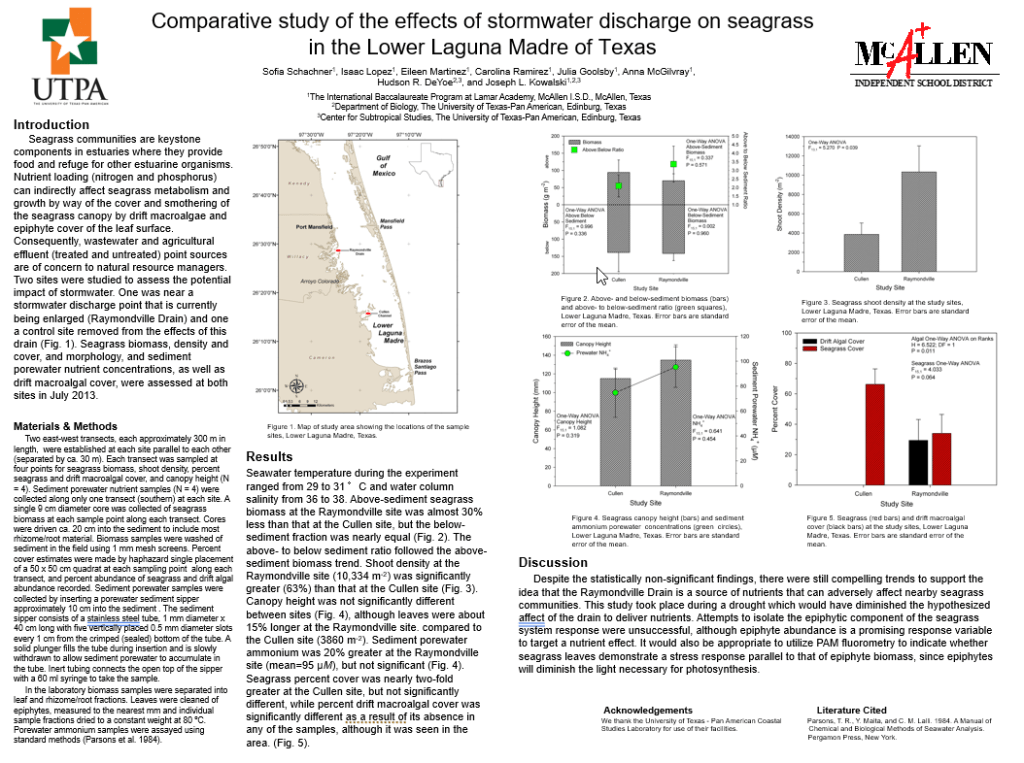
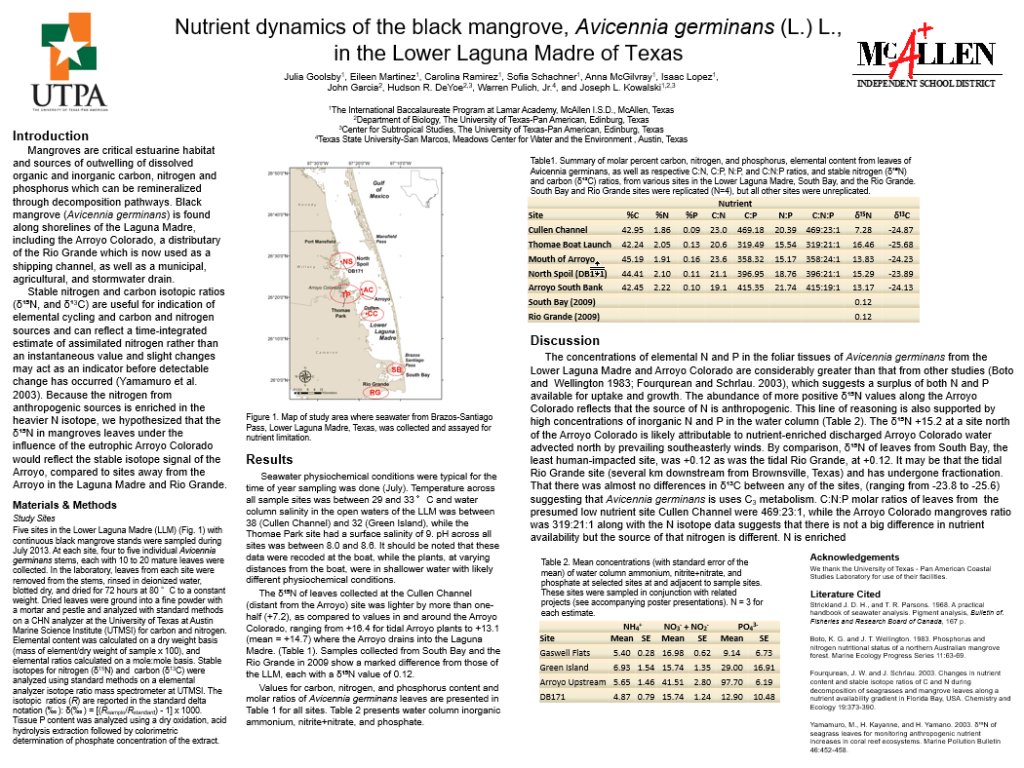
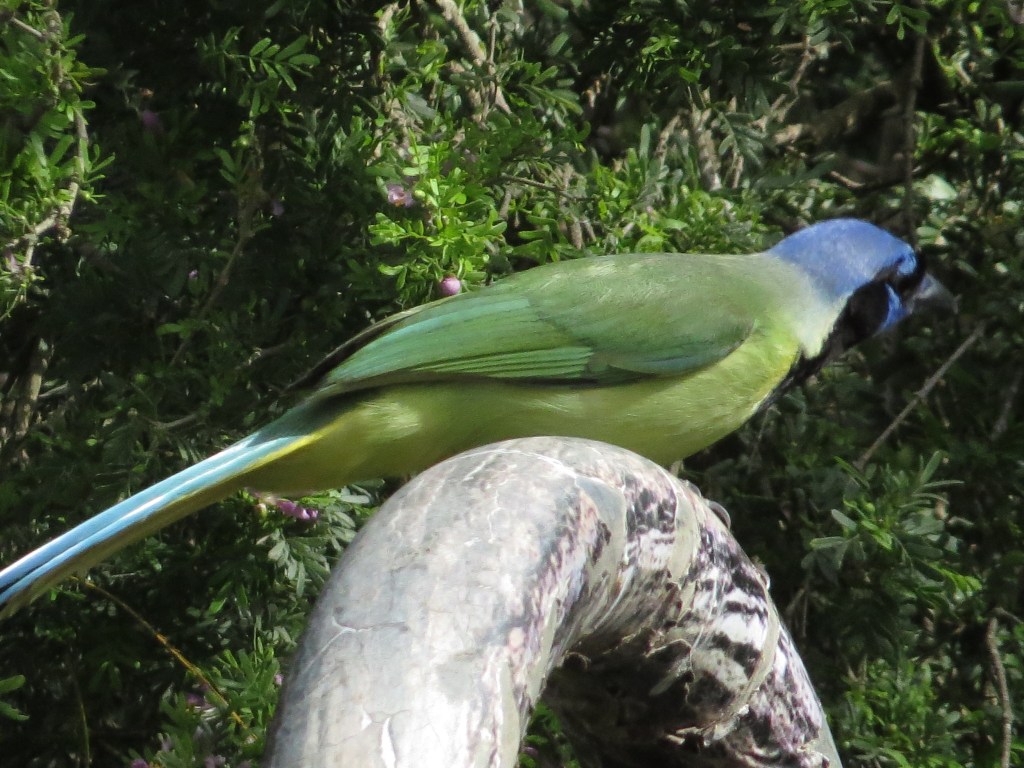
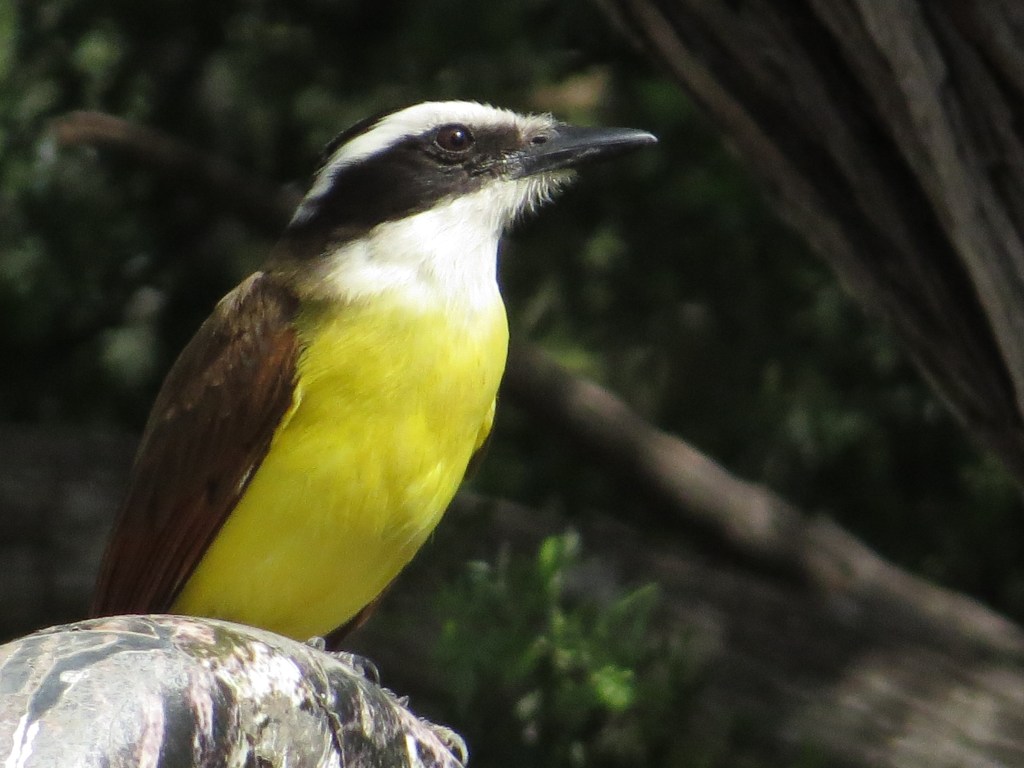
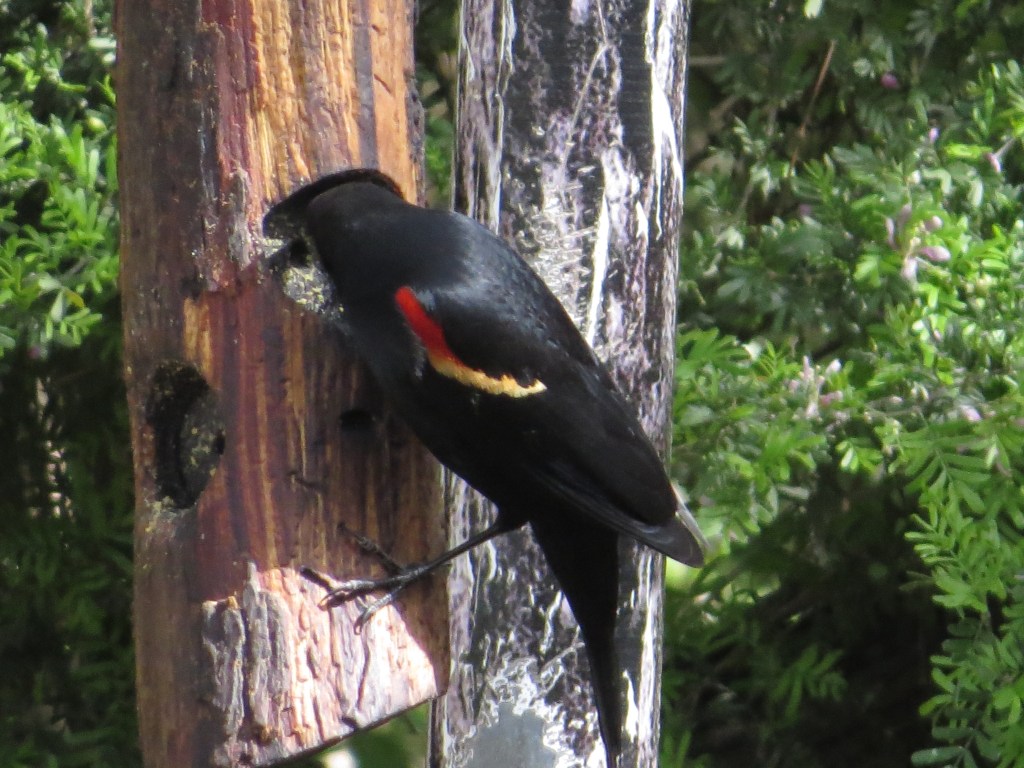
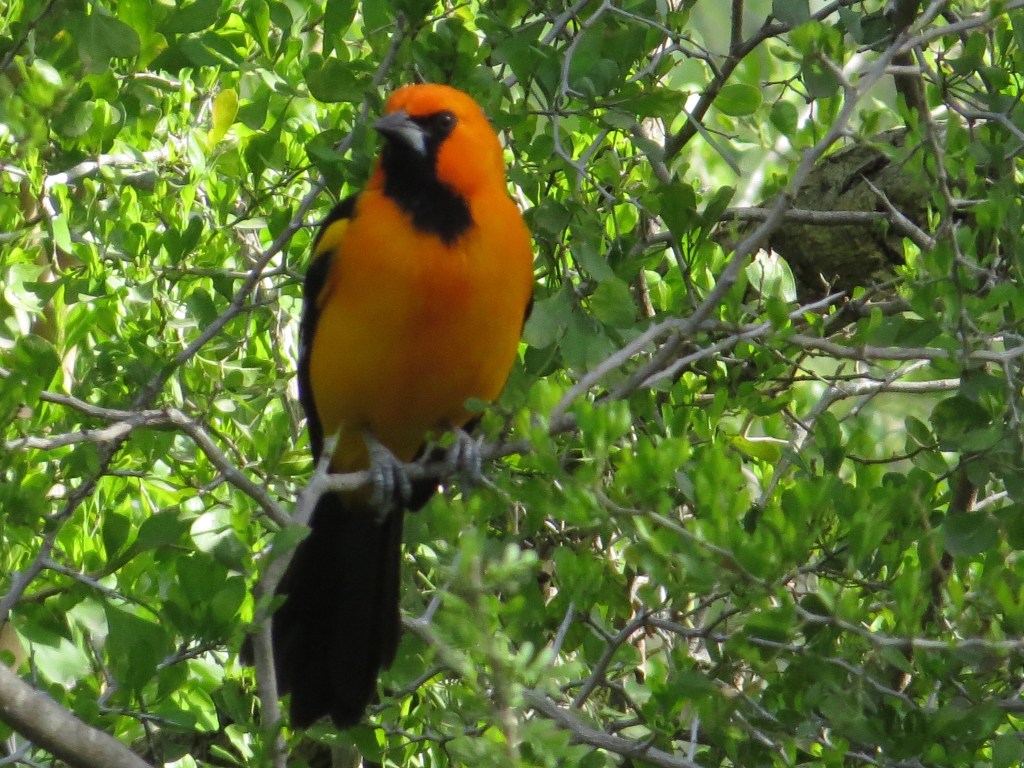
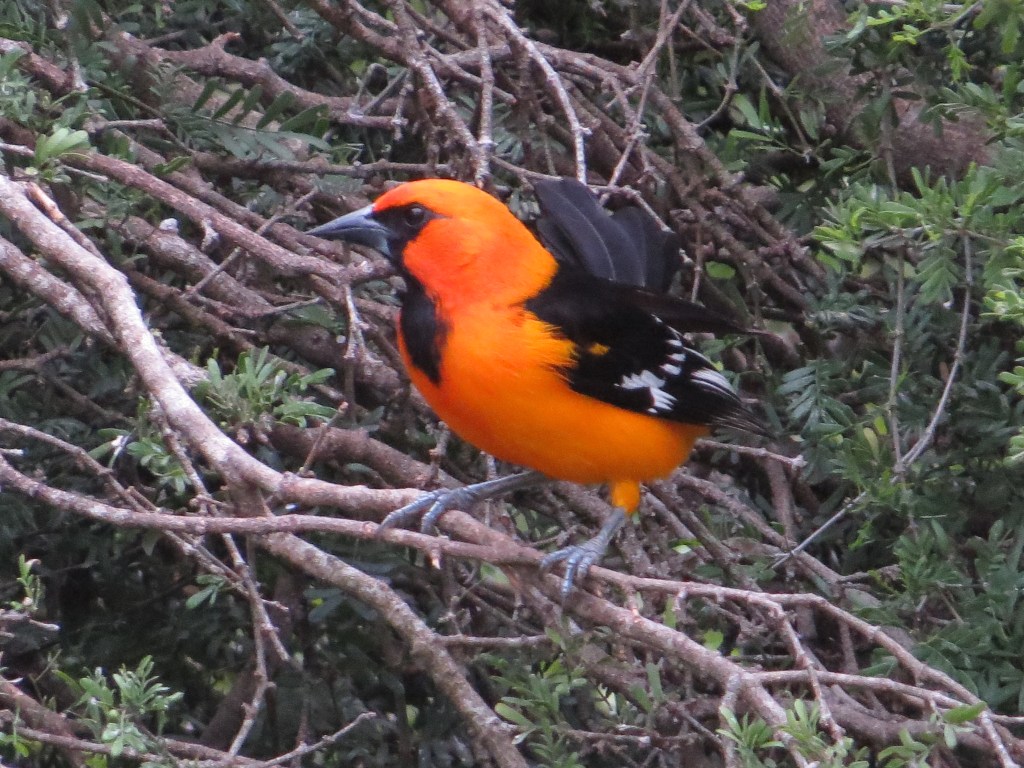
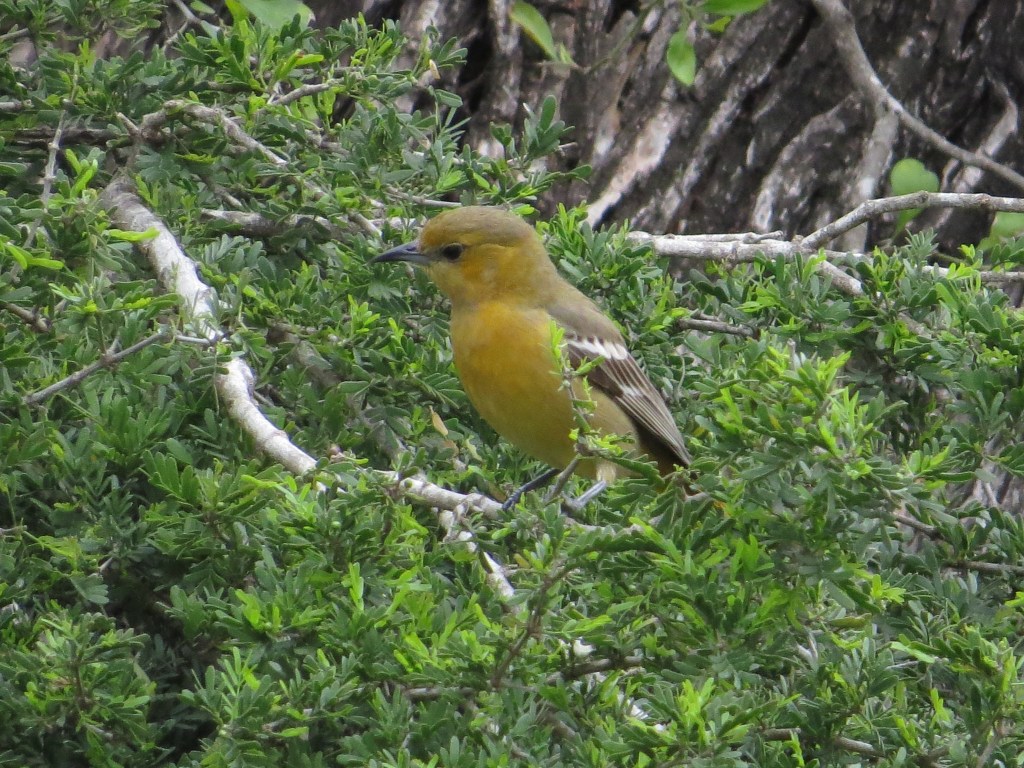
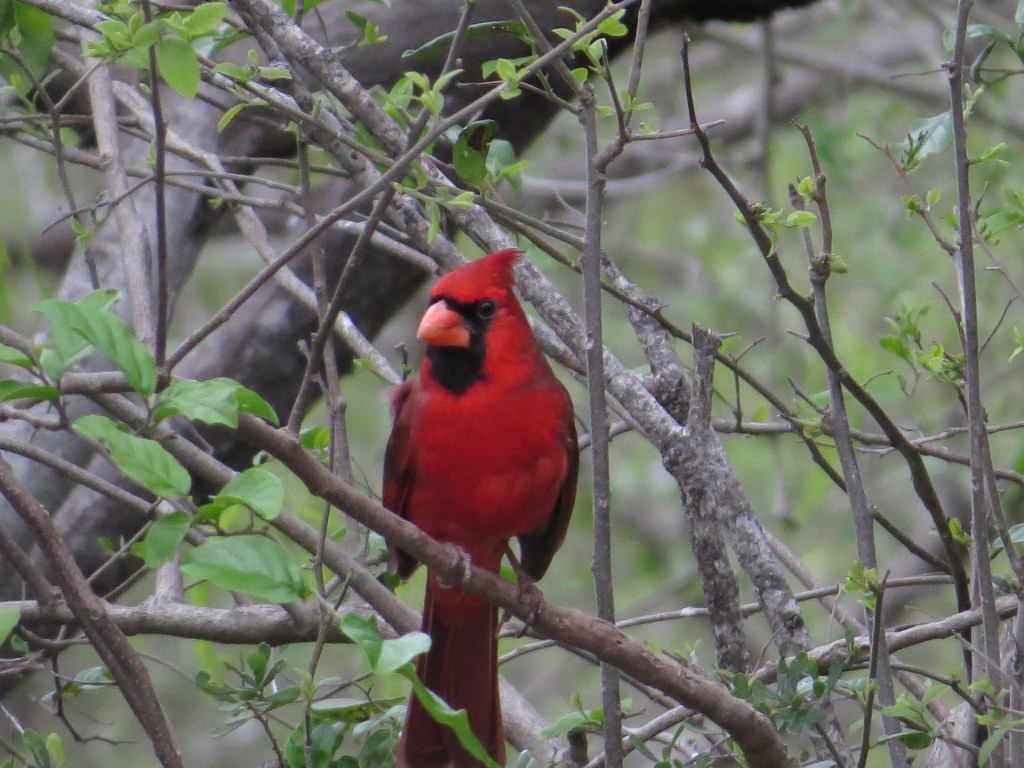
Not all estuarine plants and animals are submersed. Mangroves are important contributors to estuaries where they grow. The not only supply oxygen, but shelter. Animals (like birds) can live in the mangrove canopy. They also contribute leaves that fall to the mud, decompose and release valuable nutrients back to the muddy sediment.
 All Things Biological