by Joseph Kowalski
Coquina is the common name of a species of clam (Donax variabilis) that lives in the sandy beach sediments of many coastal shores. Donax is quite small (about 10-15 mm in length) and burrows into the sand where it filters the water for suspended bacteria, phytoplankton and debris (called detritus). They have an in-current siphon that draws water in and an excurrent siphon that pumps used water back out. In between is where they filter the food out to sustain themselves. Some folks cook up coquina and stew them. Bring your own crackers.
Coquina is also the same name used to describe rock that forms when mainly Coquina shell remains are broken up and scattered in the fore shore of the beach by pounding waves, along with many other types of invertebrates with shells made of calcium chloride. Once the fragments are swept together seawater moves through the pore spaces and cements the debris, along with sand grains and glues them together (see the image immediately below).
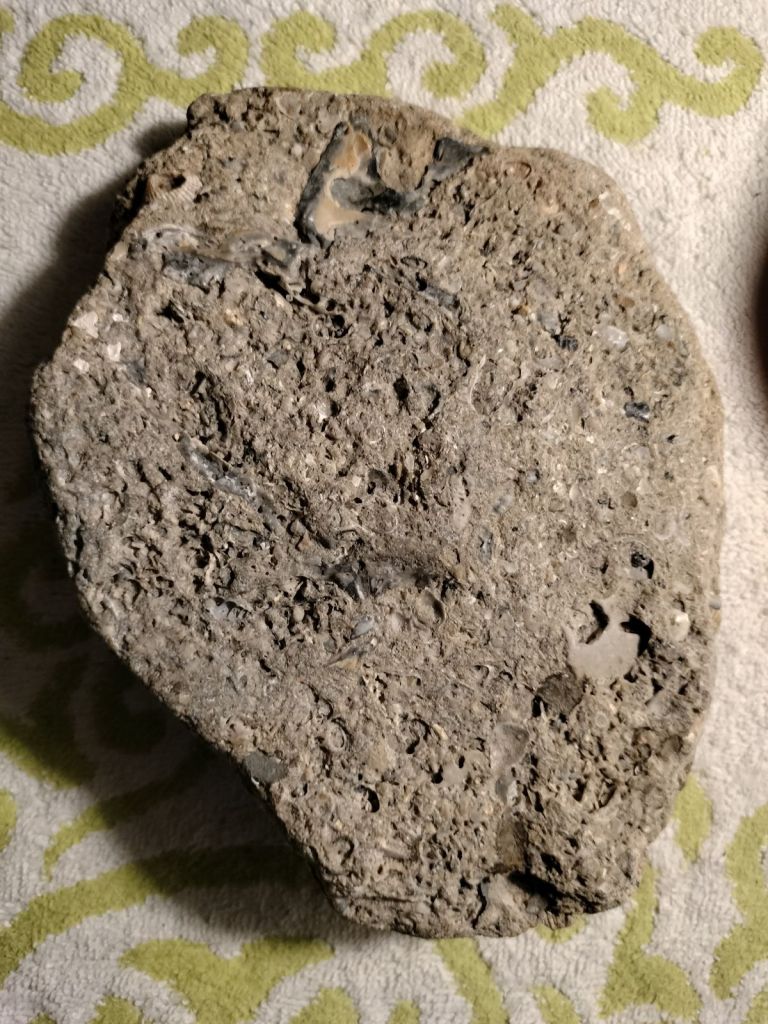
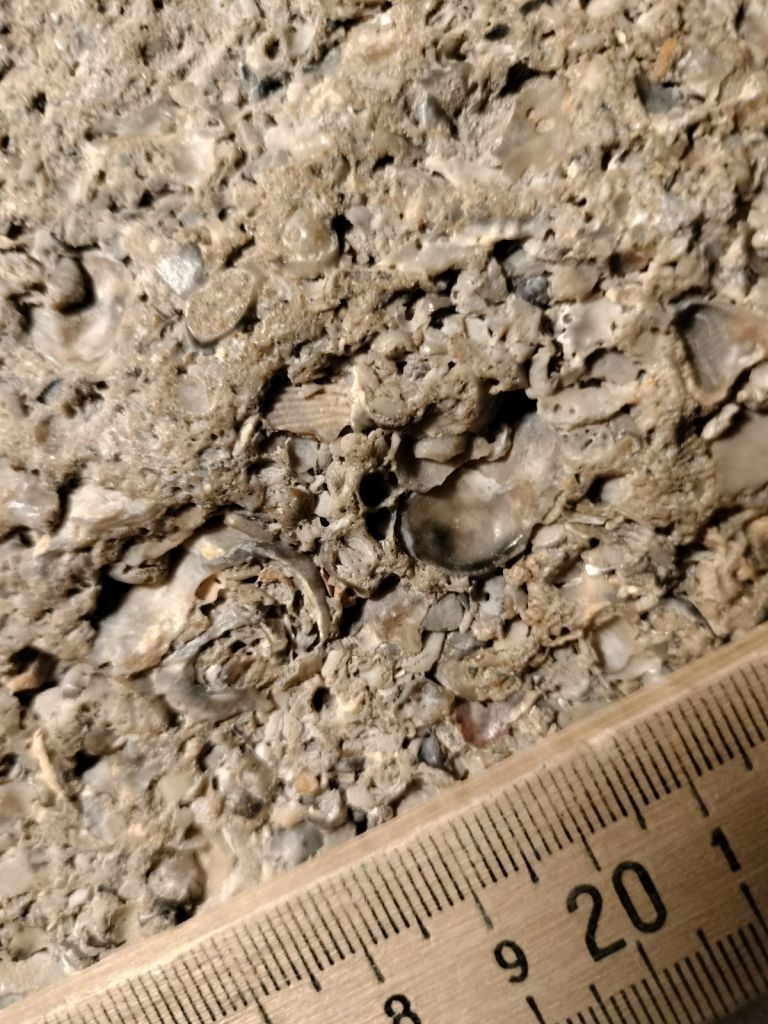
A slightly acidic porewater is ideal to act as a cementing fluid. Often calcium chloride is the cementing agent, but silica can act in this role, depending on the geochemistry of the local geologic setting. The best way to know whether you’re dealing with calcium chloride is to place a small drop of hydrochloric acid on the rock. If it fizzes, it’s calcium chloride. Silica doesn’t fizz. Now that we have the hash of broken material cemented we need a bit of time and pressure. This is how to make a sedimentary rock from a bunch of material (sand, larger rocks, fossils, and the like). The image above is an enlarged portion of the rock above. It shows more detail of many kinds of broken fossils. Don’t forget that we began this with the Donax clam and how they become obliterated in the surf zone of the beach. There are also oysters, but they may not go well in soup.
 All Things Biological
One response to “The Coquina”
Excellent.
Did not know this. Bit of a geo/bio soup.
Good job
LikeLike